Featured Post


Nico Garcia Torea
Account4GreenEco: A gamified online platform to advance sustainability accounting education
The Account4GreenEco Learning Platform is a digital resource designed to promote sustainability accounting education. Developed through the Erasmus+ Project “Sustainability Accounting Learning Platform for a Green Economy” (Account4GreenEco), co‑funded by the Erasmus+ Programme of the European Union (Ref.2022‑1‑ES01‑KA220‑HED‑000089844), the initiative brought together several CSEAR members from the University of Burgos, the University of Trento, MBS, and the University of Leuphana, alongside the IT partner, Gestionet.
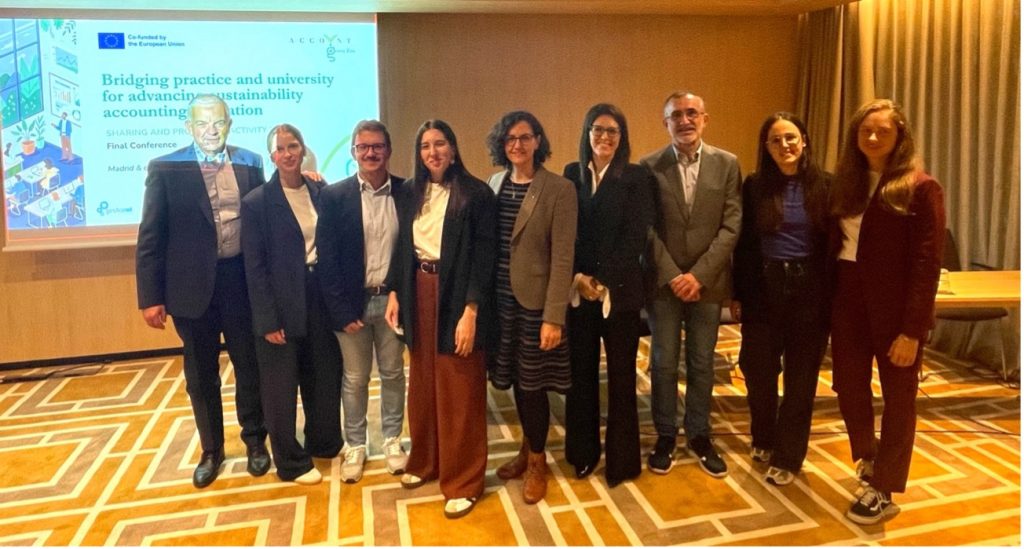
Figure 1. Members of the Account4GreenEco Project.
The pedagogical design of the platform is grounded in a self-directed learning philosophy, which emphasises learners’ autonomy throughout the learning process. This approach encourages students to actively seek knowledge, reflect, and engage in problem‑solving independently. In online learning environments, such as this one, meaningful and interactive activities are essential to foster engagement and support deep learning. To enable this self-directed learning, the platform adopts a gamified approach that integrates game elements into non‑game contexts to enhance motivation and participation. Beyond text and video content, the platform incorporates play activities, interactive challenges, and a scoring system to foster entertainment while learning. Its design balances complexity and accessibility, frequency and duration, ensuring that learners remain engaged while progressing at their own pace.
The Account4GreenEco Learning Platform can be accessed here. All materials and resources are provided in English, and registration is fully open and free of charge. While the platform is intended for students, guided by their lecturers, it is also accessible to anyone wishing to learn more about sustainability accounting, who may explore the content autonomously. Completing each unit typically requires between 4 and 5 hours.
The course is structured into three modules, each addressing a key dimension of sustainability accounting. Every module contains two units, allowing for a progressive exploration of the content. Although the modules and units follow a logical progression that forms a coherent learning pathway, they may also be taken independently and in any order by those interested in a specific topic.
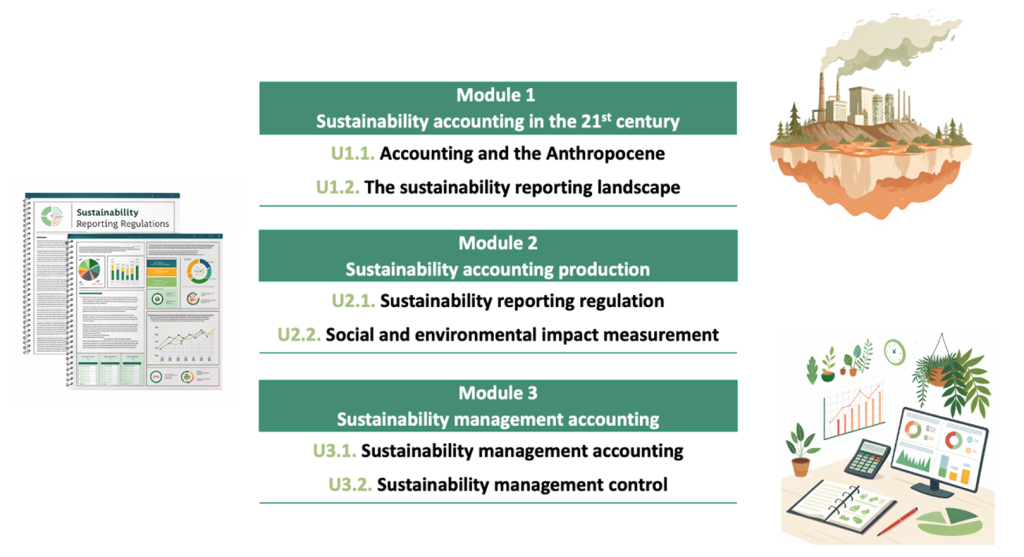
Figure 2. Module structure of the Account4GreenEco Learning Platform.
Module 1 “Sustainability Accounting in the 21st Century” sets the stage by examining the evolving role of accounting in the context of sustainability. This module includes:
Unit 1.1 “Accounting and the Anthropocene” introduces the concept of the Anthropocene as the epoch we currently live in. Then, it steps back to reflect on how accounting practices have historically contributed to the socio-environmental challenges we now face. It closes with an invitation to rethink accounting as a potential instrument for addressing complex socio-ecological problems.
Unit 1.2. “The sustainability reporting landscape” explores sustainability reporting as a key practice through which accounting engages with sustainability. It explains what sustainability reporting entails, emphasizes the central role of materiality, and outlines the main standards organizations can use to disclose information on their environmental and social impacts, risks, and opportunities.
Module 2 “Sustainability accounting production” focuses on the regulatory landscape and the assessment of sustainability impacts. This module includes:
Unit 2.1 “Sustainability accounting regulation” unpacks the complex and evolving regulatory framework for sustainability reporting in the European Union. It outlines the main disclosure requirements that organizations in the EU must meet.
Unit 2.2 “Social and environmental impact measurement” examines the concept of social and environmental impact and how it can be measured. It emphasizes the importance of understanding “change” in the systems with which organizations interact and underscores the critical role of stakeholders.
Module 3 “Sustainability management accounting” addresses the internal use of sustainability information for decision-making and management. This module includes:
Unit 3.1 “Sustainability management accounting” unit explores how accounting can support corporate sustainability strategies and improve organizational performance. It expands the scope of management accounting beyond internal operations to include the organization’s broader societal and environmental context.
Unit 3.2 “Sustainability management control” introduces management control approaches that align decision-making and employee behaviour with sustainability goals. It also stresses the importance of going beyond harm reduction, encouraging organizations to account for their positive contributions to sustainability transformations.
In line with its gamified design, the platform guides users through the learning process by integrating text, video, interactive activities, documents, and other resources. Content is organised through a micro‑learning approach, offering short, focused pieces of material. These include text explanations, short videos, 16 types of interactive activities, role‑play scenarios in which learners make decisions that shape their pathway, and a final assessment quiz for each unit. The platform is structured much like a streaming service: each unit functions as a “series,” its sections as “seasons,” and each piece of content as an individual “episode.”
The Account4GreenEco Learning Platform was officially launched on November 13, 2025, at the Project’s Final Conference, and will be operational at least until November 2030. The recording of this event (which included a presentation of the platform and a series of panels with academics and professionals discussing the development of sustainability accounting education) can be viewed at this link.
Insights about students’ engagement with the platform and their appreciation of the training, you may consult this blog from a prior ECoP online workshop featuring Account4GreenEco.
We hope this resource will inspire further experimentation, collaboration, and dialogue within the CSEAR community to advance sustainability accounting education collectively.