In the first instalment of our Executive Council Spotlight Series, Helen Tregidga reflects on her time with the CSEAR Executive Council, the value of academic community, and the future of social and environmental accounting research.
Thursday, 19 Mar 2026 - 6 min read
Conjuring the Accounting Education Atelier
Matthew SOROLA, TBS Business School
Calls for education reform are not new for Accounting educators. Each new accounting scandal reignites public demand for change, while employers frequently express dissatisfaction with the skills of recent graduates; especially in the age of AI. The message is clear: accounting education needs to evolve. However, there’s a big difference between recognizing the need for reform and realising it. Course content is only one piece of the puzzle. A major challenge lies in navigating the complex web of institutional constraints, departmental politics, assessment structures, and the practical realities of teaching—especially for those of us who are early in our careers and lack the authority to unilaterally redesign curricula.
In a recent article (Sorola and Drujon D’Astros, 2025), my co-author and I explored these challenges firsthand as we attempted to reform an introductory accounting course. The literature on critical accounting education offered valuable insights into what should be taught—emphasizing the need for sustainability, ethical reasoning, and critical thinking. Yet, translating these ideas into practice was much more difficult. We faced questions that extended beyond content: How should new material be delivered? Would a traditional lecture format suffice, or should we incorporate interactive exercises, digital tools, or even AI-assisted learning? How could we ensure that our approach resonated with students while also meeting institutional expectations? The paper documented our efforts to introduce an "accounting as a language" framework, but it also built on a much simpler idea: reform is not just about what you teach, but how you teach it (Thomson & Bebbington, 2004), who you teach with, and the institutional context in which you operate.
One of the most significant hurdles we encountered was the need to align our vision with the realities of team-teaching in a core course. Unlike specialized electives, where instructors often have more autonomy, core courses are typically taught by multiple faculty members, each with their own pedagogical styles and priorities. Convincing colleagues, administrators, and even students of the value of our reforms required careful negotiation. We had to demonstrate that our changes were not just theoretically sound but also practical and adaptable to existing structures. This experience highlighted a critical point: meaningful reform cannot happen in isolation. It requires collaboration, experimentation, and a willingness to engage with the messy, iterative process of change.
This realization led me to reflect on the broader landscape of accounting education. While academic literature provides a wealth of ideas for reform, there are few spaces where educators can come together to grapple with the practical challenges of design and implementation. How do we move from theory to practice? How do we test new approaches in a supportive environment before bringing them into the classroom? And how do we sustain momentum for change in the face of institutional inertia?
CSEAR’s Education Community of Practice (ECoP) events have been an amazing resource for me as I look to address these questions. ECoP events (for a recap, see Rodrigue and Russell, 2024) offer a rare opportunity to step outside the day-to-day demands of teaching and engage with innovative pedagogical approaches. Attending ECoP sessions, I found myself exposed to methods and perspectives that challenged my assumptions about how accounting can be taught. Some of these ideas were directly applicable to my courses; others were not. For me, the real value was in the space these events created for reflection and dialogue. Being in a room with like-minded educators, all wrestling with similar challenges, was both inspiring and empowering. It reminded me that reform is a collective endeavour, rooted in shared experiences and mutual support.
This is the milieu in which the idea for the Accounting Education Atelier was born. Inspired by the collaborative spirit of ECoP, the Atelier was designed as a weeklong workshop (Atelier in French) that prioritizes both theoretical engagement and practical experimentation. The Atelier is structured around key themes in accounting education, but it is also designed to foster informal exchange, peer feedback, and experiential learning. Our goal is to create an environment where educators can move beyond abstract discussions of reform and actually practice new teaching methods.
The structure of the Atelier reflects this intention. Each day will combine thematic sessions led by experts in the field with hands-on workshops where participants can apply what they’ve learned.
- Ludopedegogy in action: Explore game-based learning, design challenges, and how play can deepen conceptual understanding and ethical reflection.
- Role Play & Drama: Experience firsthand how immersive scenarios can shift perspectives and spark critical thinking.
- AI Simulations: Build web-based simulators to model real-world business cases—no coding required.
- Podcasts: Learn to design, produce, and integrate educational podcasts into your teaching with hands-on tools and strategies.
- AI Case studies: Use generative AI to build dynamic teaching case studies with a structured, four-step workflow and practical tools.
But just as importantly, we’ve built in time for informal conversations, networking, and collaboration. Some of the most valuable insights often come from casual discussions over coffee or during a shared meal, and we want to create space for those moments to happen.
If you’re an accounting educator who has ever felt frustrated by the gap between the theory of reform and the reality of implementation, we invite you to join us. The Atelier is for anyone who believes that accounting education can—and must—be better, and who is willing to roll up their sleeves and work toward that goal. Whether you’re an early-career academic struggling to make changes in a core course, a seasoned professor looking to refresh your teaching, or simply someone who wants to connect with others who share your passion for pedagogical innovation, this is your opportunity to rethink what accounting education can be.
The challenges we face are significant, but so are the opportunities. By coming together, experimenting, and supporting one another, we can help each other turn the calls for reform into tangible change.
The Accounting Education Atelier will be held at TBS in Toulouse France from 22-26 June, 2026. For more information, check out our dedicated webpage for the event: https://www.tbs-education.com/accounting-education-atelier/
Works cited:
Rodrigue, M., & Russell, S. (2024). Two Years in the Making: Co-Learning Insights from the CSEAR’s Education Community of Practice. Social and Environmental Accountability Journal, 44(3), 217-236.
Sorola, M., & Drujon d'Astros, C. (2025). Critical Accounting Education Reform: A Note on Teaching Teams and Prefigurative Experimentation. Social and Environmental Accountability Journal, 1-26.
Thomson, I., & Bebbington, J. (2004). It doesn’t matter what you teach?. Critical Perspectives on Accounting, 15(4-5), 609-628.

Join our CSEAR community
Gain access to the Social and Environmental Accountability Journal, read full news articles and resources. Visit our membership page to find out all the benefits of joining our inclusive community of scholars.
Become a MemberRelated Articles

Education
18 June 2026 - 5 min read
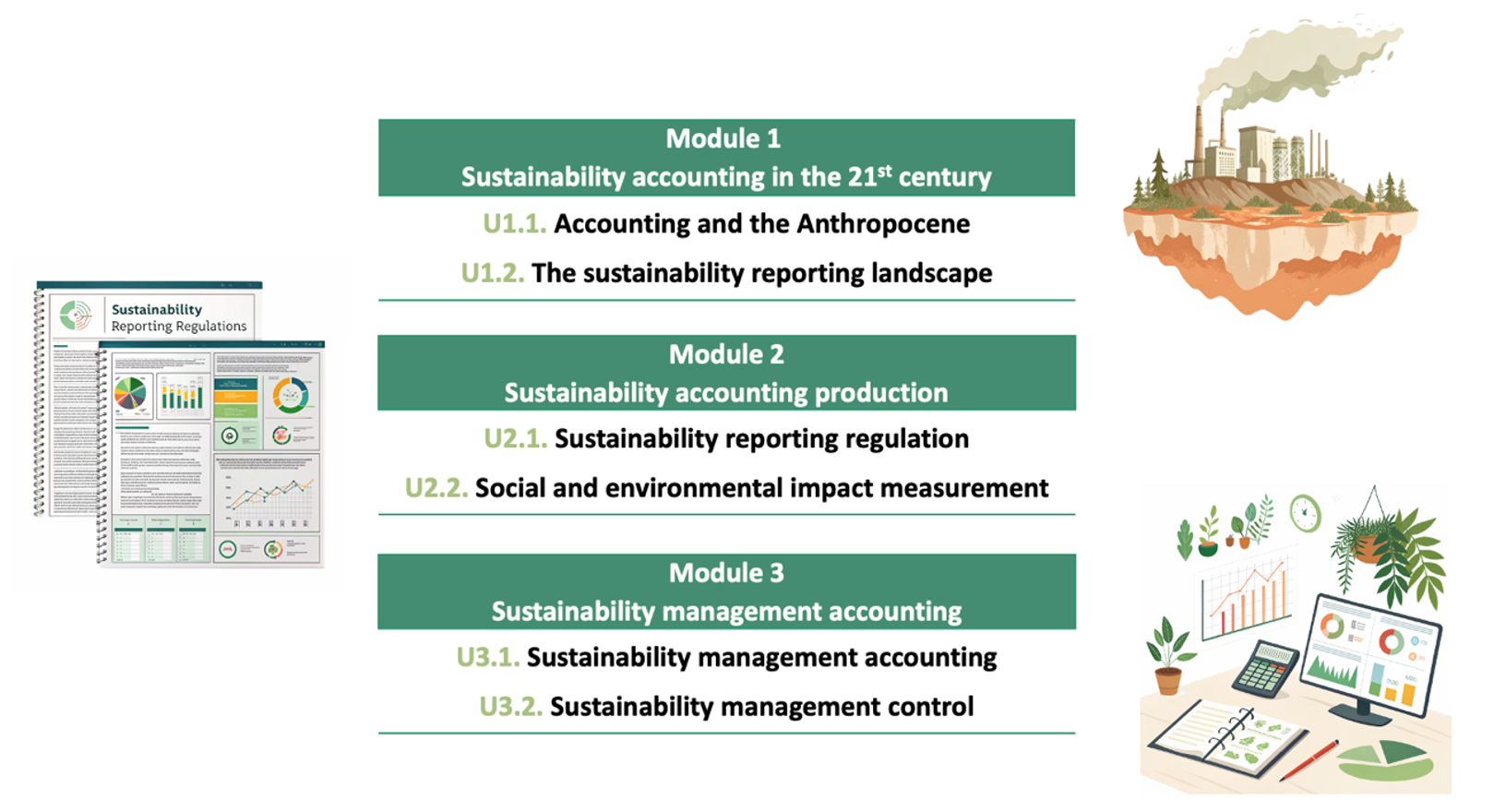
Reimagining sustainability accounting education through place and play
Hind Hsissou (Audencia Business School) and Keeland McMahon (University of Limerick)
Education
6 February 2026 - 5 min read
Account4GreenEco: A gamified online platform to advance sustainability accounting education
Nico Garcia Torea